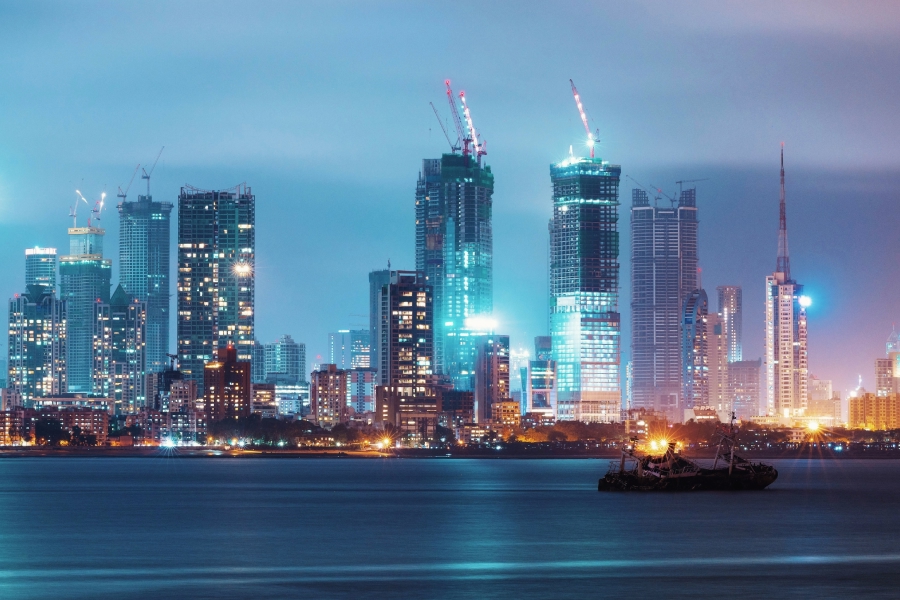

Paris is no longer a city in a hurry to build.
The cranes that once crowded the skyline ahead of the 2024 Olympic Games have thinned. The massive civil works tied to the Grand Paris Express have shifted from spectacle to routine. What remains, in early 2026, is quieter and more demanding: a city learning how to change without expanding.
Construction in Paris today is less about adding square meters than negotiating their existence. Every project, no matter how modest, moves through a web of constraints that feel uniquely Parisian. History presses in from one side. Climate rules press from another. Neighborhood politics are never far from the site boundary. Even the ground beneath the city carries conditions shaped by centuries of excavation and reuse.
This isn’t a pause, but a structural reset.
After two years of contraction across Europe’s construction sector, forecasts suggest Paris and the wider Île-de-France region have entered a period of cautious stabilization, with modest growth expected to return gradually. But the recovery is uneven. Public works remain active. Residential construction remains deeply constrained. What has disappeared is the category of easy projects.
Paris has entered a phase where nearly every viable build is complex by default. Growth is no longer the organizing principle. Stewardship is.
A market without easy work
The defining feature of Paris’ construction market isn’t slowdown but divergence.
Infrastructure and civil engineering continue to anchor activity, driven by the delivery phase of the Grand Paris Express, Europe’s largest transit expansion. As tunneling gives way to systems installation, station fit outs and testing, the program still absorbs significant labor and technical capacity. For major contractors and specialized firms, it provides rare visibility in a market otherwise short on certainty.
Housing tells a different story.
Residential construction across France has fallen to levels not seen since the mid-20th century, with housing starts dropping to roughly 250,000 units annually, far below demographic needs. In the Paris region, land scarcity, high acquisition costs and long administrative timelines have compounded the downturn. Even as financing conditions begin to ease, industry groups expected housing output to remain depressed through 2025, with a meaningful rebound unlikely before 2026 or later.
Nonresidential construction sits between those poles. Traditional office demand has weakened under hybrid work patterns, leaving older stock increasingly obsolete. At the same time, investment has shifted toward specialized assets such as data centers, logistics hubs and high-performance, green-certified offices in prime locations. These projects are fewer in number and higher in complexity, reinforcing a broader trend: less volume, more risk.
For contractors, the implications are stark. Volume once absorbed inefficiency. Complexity doesn’t.
Building inward, not outward
The most consequential shift in Paris isn’t what is being built, but where construction is still allowed to happen.
Inside Paris and much of Île-de-France, greenfield development has effectively run its course. New projects are increasingly concentrated on existing sites, shaped by demolition-reconstruction, heavy renovation and adaptive reuse. This pivot isn’t merely economic but embedded in policy.
France’s Zéro Artificialisation Nette mandate commits the country to net-zero land consumption by 2050, requiring regions to reduce land take every decade. In Île-de-France, already heavily urbanized, the effect has been to push development pressure inward. In outer suburbs, mayors have grown reluctant to approve projects on undeveloped land, wary of future noncompliance with regional master plans.
Between 2021 and 2025, most new housing in the region came from urban renewal rather than expansion onto natural or agricultural land. The result is a market dominated by constrained sites, longer timelines and higher per-project intensity. There are fewer active construction sites, but each one carries more technical, regulatory and financial weight.
Renovation and retrofit have become the structural core of the market. While renovation activity softened slightly in 2024 amid household purchasing power pressures, it remains resilient because much of it is now mandatory. Energy audits, retrofit requirements for tertiary buildings and large-scale public housing programs continue to drive work, supported in part by state incentives.
Renovation in the French capital is no longer a niche, but the default.
A city governed by restraint
That shift is reinforced by Paris’ planning framework, which now prioritizes restraint above growth.
The city’s bioclimatic urban plan, adopted in the mid-2020s, marked a decisive break from density as a guiding principle. Where earlier regimes favored maximizing buildable area, the current framework emphasizes climate resilience, permeability and social balance.
Courtyards once treated as latent development potential are now protected ground. Mature trees define no-build zones around their root systems. A site’s footprint is negotiated rather than assumed.
The effect is subtle but pervasive. Parcels that once supported straightforward extensions now come with reduced envelopes and tighter geometries. Large redevelopment sites often carry inclusionary housing requirements that reshape project economics. Long-held assumptions about land value no longer hold. Feasibility depends less on ambition than on alignment with the city’s priorities.
Paris isn’t trying to grow outward or upward. It is trying to breathe.
When climate rules meet history
If planning policy defines where Paris can build, environmental regulation increasingly dictates how it must.
France’s RE2020 building standards place carbon at the center of design decisions, measuring emissions across a building’s full life cycle rather than focusing solely on operational energy use. In Paris, that logic collides almost immediately with the historic fabric.
The most efficient solutions on paper are often the least acceptable in practice. External insulation is typically prohibited on stone façades. Zinc roofs, iconic and culturally protected, resist conventional photovoltaic systems. What works in newer cities becomes contentious here.
Design teams operate within a narrow corridor between performance and preservation. Internal insulation consumes valuable floor area and introduces moisture risks in centuries-old masonry. Renewable energy targets are met through discreet, often costly integrations that preserve visual continuity at the expense of efficiency. Materials such as hemp-lime composites have gained traction not because they are fashionable, but because they allow historic walls to breathe while improving thermal performance.
These solutions are technically demanding, and they’re rarely cheap. They require specialized trades and careful sequencing. Compliance in Paris isn’t achieved through shortcuts as much as it’s earned through accommodation.
Execution under pressure
Even when design and regulation align, progress in Paris is rarely linear.
Public scrutiny is constant. Neighborhood groups are deeply invested in their surroundings, and legal challenges to permitted projects remain common. Appeals are filed over light, noise, scale or disruption itself. While recent reforms have narrowed abuse and shortened some timelines, delay remains a structural risk — one developers now budget for as routinely as materials.
Then there is the city beneath the city.
Large parts of Paris sit atop a network of former quarries, some carefully mapped, others less so. Before foundations are poured, extensive geotechnical investigations are required. If voids are discovered, they must be stabilized through injections whose scope is often impossible to predict until work begins.
Above ground, space is no more forgiving. As curbside parking has been replaced by bike lanes and wider sidewalks, staging areas have largely disappeared. Materials arrive just in time, unloaded quickly and moved indoors. Noise is monitored. Work hours are tightly controlled. Site managers spend as much effort managing movement and sound as managing schedules.
In Paris, projects rarely fail on paper. They fail on the street.
Labor as the limiting factor
Beneath every other constraint lies a simpler one: labor.
The shortage of zinc roofers — known locally as “couvreurs-zingueurs” — is emblematic. Paris’ gray zinc rooftops define its skyline, but maintaining them requires specialized skills that are increasingly scarce. Industry estimates point to a persistent gap in qualified roofers, delaying maintenance and increasing risk across the historic housing stock. The work is demanding and dangerous. Falls from height remain a leading cause of fatal construction accidents.
In late 2024, the craft received UNESCO recognition as intangible cultural heritage, an effort to elevate the trade and attract new apprentices by reframing it as stewardship rather than manual labor.
The broader workforce faces similar pressure. The construction labor pool is aging, and retirements continue to outpace new entrants in key trades. Industry groups project further job losses tied to demographics and the housing slowdown. Alternative training models and retraining programs have emerged, but their scale remains limited.
In a market dominated by renovation and infrastructure, the skills that matter most are the hardest to replace.
Why Paris still matters
For all its friction, Paris remains one of the most instructive construction markets in the world.
It shows what building looks like when limits are taken seriously. In a city where expansion is politically, physically and culturally constrained, progress depends on mastering complexity rather than outrunning it.
Builders who succeed here aren’t the ones who arrive with ready-made playbooks. They are the ones who work within the grain of the city: adapting existing structures, negotiating with heritage rather than fighting it, and planning for delay as a condition rather than an exception. Value is created through precision, coordination and discipline.
As more global cities confront similar pressures — aging building stock, climate mandates and public scrutiny — Paris offers a glimpse of a future where construction is less about growth and more about stewardship.
When easy projects disappear, execution becomes the business.
How does Bluebeam support construction projects in highly constrained cities like Paris?
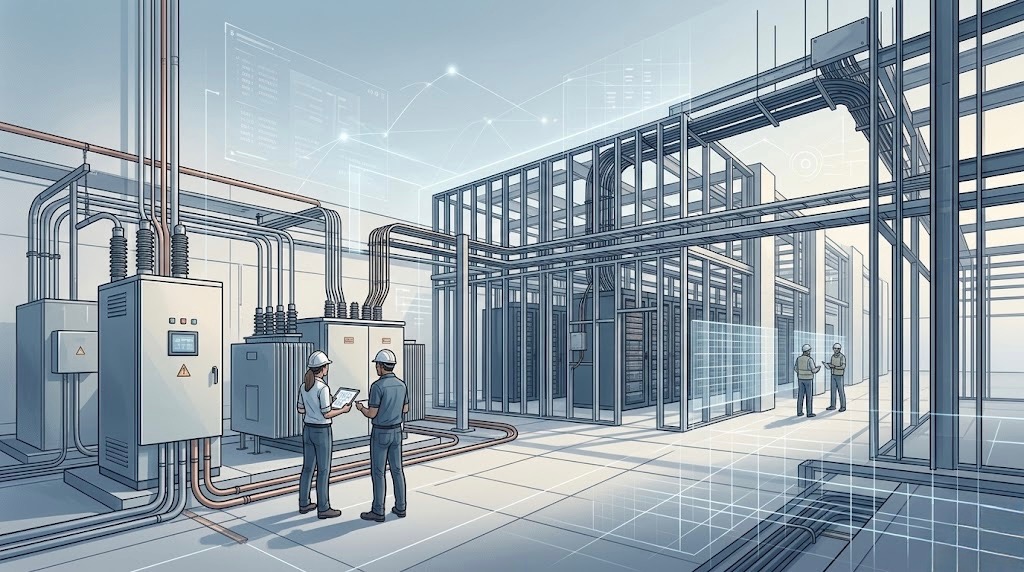
Bluebeam helps project teams operate precisely when space, time and tolerance for error are limited. By centralizing drawings, markups and coordination in a shared digital environment, teams can resolve issues early, document decisions clearly and reduce on-site friction — critical in dense urban settings where mistakes are costly and visibility is high.
Why is Bluebeam particularly relevant for renovation and adaptive reuse projects?
Renovation-heavy markets depend on clarity more than speed. Bluebeam allows teams to layer new information over existing conditions — structural changes, heritage constraints, sequencing notes — without losing context. That continuity supports projects where design evolves in response to discovery, regulation and historic fabric rather than following a fixed template.
How does Bluebeam help teams manage regulatory and stakeholder complexity?
In cities with intense public scrutiny, documentation becomes a form of risk management. Bluebeam provides a clear audit trail of comments, revisions and approvals, helping teams demonstrate compliance and alignment across architects, engineers, contractors and public authorities. Transparency reduces friction when projects are questioned or challenged.
What role does Bluebeam play in execution when logistics are tight and delays are common?
When staging space is minimal and schedules are vulnerable, coordination errors ripple quickly. Bluebeam supports real-time collaboration between office and field, helping teams anticipate conflicts, clarify scope and keep work moving even when conditions change. It doesn’t eliminate delay — but it helps teams adapt without losing control.
How does Bluebeam align with a construction market focused on stewardship rather than growth?
As construction shifts from expansion to care and optimization, tools must reward precision over volume. Bluebeam fits environments where value is created through coordination, reuse and disciplined execution — supporting teams who succeed not by building more, but by building carefully, within limits.