
For the past 20 years, we’ve told ourselves a comforting story about how progress works.
Software scales. Capital flows. Innovation compounds. The digital economy, we’re told, floats above the messiness of the physical world — lighter, faster, cleaner. If something matters enough, the logic goes, we’ll fund it, code it and ship it.
That story is starting to fall apart.
Across the United States, billions of dollars are lined up for AI infrastructure, semiconductor plants, grid upgrades and clean energy projects. The money and urgency are real. But the work increasingly isn’t getting done on schedule — or at all. And it’s not because the ideas are flawed or the capital is missing, but because the physical systems required to make those ideas real can’t keep up.
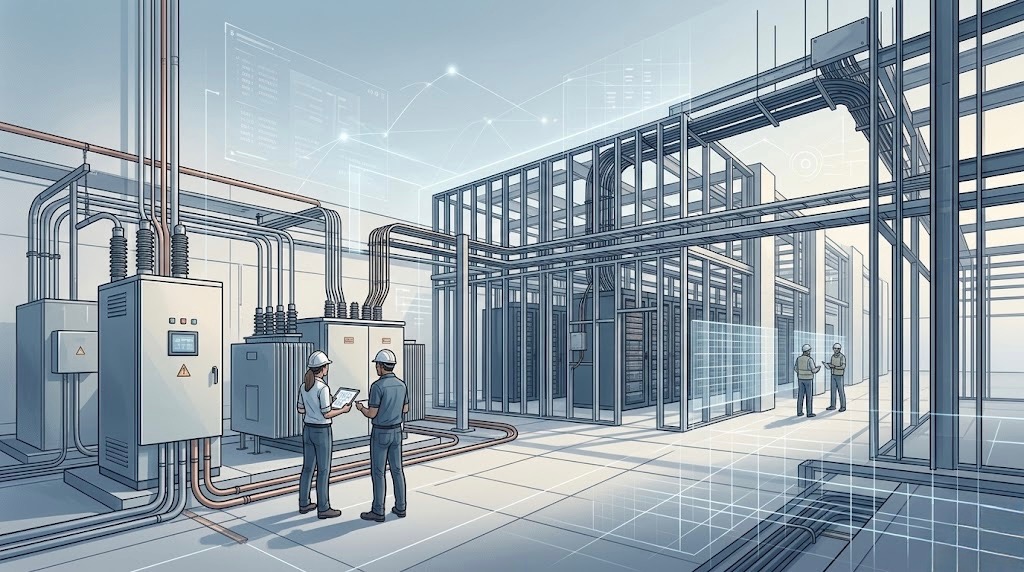
Data centers don’t come online because a model is ready; they come online when someone finishes pulling wire, installing switchgear and energizing the site. Chip fabs don’t run on ambition but on precision installation carried out by people with rare skills and years of experience.
Power grids don’t modernize themselves. They’re rebuilt, mile by mile, by crews aging out faster than they can be replaced.
What’s emerging isn’t a temporary labor shortage or a cyclical slowdown, but a structural bottleneck in the physical economy — the network of skilled trades, construction workflows and coordination systems that quietly underpin everything we call “digital.”
Construction productivity has been flat or declining for decades. Rework, miscommunication and outdated information quietly waste billions of dollars’ worth of skilled labor every year, labor no amount of capital can instantly replace.
The uncomfortable truth is this: the next decade of digital growth won’t be limited by processors, models or funding rounds. It will be paced by the slow, exacting work of building things in the real world, and by how well we support, coordinate and protect the people who do that work.
The signals are already there. Contractors report acute shortages in the trades required to build and power data centers, modernize the grid and bring advanced manufacturing online. Nearly half of the workforce is nearing retirement. Training replacements takes years under the best conditions, and even that pipeline is constrained by instructor shortages and long apprenticeship timelines.
All the while, productivity keeps moving the wrong way. While manufacturing and agriculture increased output per worker, construction has lagged. The systems around them simply haven’t kept pace with project complexity. Rework caused by conflicting drawings, unclear intent and poor coordination consumes skilled hours no hiring surge can quickly replace.
Together, these trends expose the faulty assumption at the heart of the digital economy: that physical execution will always be there when we’re ready for it. Capital can mobilize quickly. Software can iterate overnight.
The physical economy, however, moves at human speed — and right now, it’s being asked to move faster than it’s built to go.
That gap between ambition and execution is where the bottleneck lives.
The assumption everyone is making
For years, the dominant assumption behind economic growth was simple: If demand is real and capital is available, physical capacity will follow. That logic worked when growth was incremental and timelines stretched across decades.
Today’s build cycle is different, however. AI infrastructure, grid expansion and advanced manufacturing compress schedules while increasing complexity.
The digital economy moves at the speed of iteration. The physical economy moves at the speed of people, permits and coordination. Treating those speeds as interchangeable is the mistake shaping the next decade of growth.
The mismatch is already visible. Data centers rise faster than the systems that power them. Buildings go up. Equipment arrives. Then projects stall, waiting on specialized electrical work that can’t be rushed.
Modern AI facilities aren’t server warehouses; they’re dense electrical systems demanding precision installation and careful commissioning. In many regions, the limiting factor isn’t land or capital but the availability of the right crews.
The same pattern plays out in semiconductor manufacturing. Billions have been committed to reshoring chip production, backed by policy incentives and geopolitical urgency.
Yet factories don’t materialize on schedule because funding exists. Semiconductor fabs require installation work performed to exacting tolerances by highly specialized trades. When those teams aren’t available, timelines slip and capital sits idle.
Nowhere is the tension more consequential than the power grid. Every data center, fab and electrified system ultimately depends on transmission infrastructure that has barely expanded in decades. National goals call for rapid increases in grid capacity, but the workforce responsible for building and maintaining it is aging out.
Even fully approved projects hit the same hard limit: without trained line workers and electrical crews, the grid simply can’t grow fast enough.
Not all construction is the same
One reason this bottleneck has been slow to register is that, on the surface, construction looks uneven rather than constrained.
Office projects are slowing. Retail construction is soft. From a distance, it can appear capacity is freeing up — that workers from quieter markets will simply flow to wherever demand is hottest.
That assumption doesn’t hold up.
What’s growing isn’t general construction but mission-critical construction — the high-stakes work required to build data centers, semiconductor facilities and the electrical infrastructure that supports them.
These projects demand a different level of precision and coordination. The skills required to build a speculative office shell aren’t interchangeable with those needed to install high-voltage switchgear, commission backup power systems or work inside cleanrooms.
The result is a misleading picture. Aggregate data suggests slack. On the ground, the trades that matter most to the digital economy are stretched thin. Electricians, pipefitters, instrumentation technicians and line workers are booked months out, even as other segments cool.
It’s a bifurcated market, and digital growth sits squarely on the overheated side.
Why labor isn’t fungible
In theory, labor moves to where demand is strongest. In practice, however, skilled physical work doesn’t behave that way.
The electricians needed to energize a data center aren’t interchangeable with crews framing an office building. Semiconductor tool installation can’t be staffed overnight by general labor. These roles require years of training, system-specific experience and precision that only repetition provides.
That rigidity shows up clearly on data center projects. A modern AI facility can sit largely complete — walls up, racks staged, cooling installed — while progress stalls at the electrical layer. High-voltage crews are booked months in advance. Bringing in less specialized labor isn’t an option.
Energizing a data center isn’t about speed; it’s about correctness. One mistake can delay commissioning indefinitely.
So, work waits.
Semiconductor fabs reveal the same dynamic at higher stakes. Installing tools inside a fab requires tradespeople trained for ultra-clean environments and unforgiving tolerances. These aren’t skills borrowed from adjacent projects when timelines tighten. When those teams aren’t available, work simply pauses.
No amount of funding compresses the learning curve.
Why automation hasn’t solved this
It’s tempting to assume automation will absorb the shortage. That logic worked in manufacturing and logistics. Construction — especially mission-critical work — resists it for a reason.
Jobsites are unstructured environments. Conditions change daily. Materials arrive out of sequence. Work happens overhead, underground and inside live systems where errors mean outages or safety risks. Skilled humans adapt. Machines still struggle.
Robotic welding illustrates the gap. In factories, robots thrive. Parts are standardized. Conditions are predictable. On active jobsites, though, that structure disappears. Welds happen in tight chases, overhead, around existing systems. A skilled welder adjusts instinctively. A robot’s advantage collapses.
Automation helps at the margins. Drones speed surveying. Software improves layout and coordination. Robotics reduce physical strain.
But these tools multiply human effort; they don’t replace it. The work that defines mission-critical construction remains stubbornly human.
The hidden drain: wasted labor
If labor can’t be replaced quickly and automation can’t solve the shortage, the most consequential question becomes quieter:
What happens to the labor we already have?
This is where capacity leaks. Rework, miscommunication, outdated information and fragmented workflows quietly consume skilled hours that can’t be recovered. In an environment where experience is scarce, every lost hour matters.
Much of this waste isn’t caused by the work itself, but by the systems around it. Crews aren’t slowed by lack of skill, but conflicting drawings, unclear intent and version confusion. When that happens, progress stalls and work gets redone.
This is where disciplined document control and shared visibility matter. When teams work from a single, current set of drawings — with markups tied directly to scope and intent — fewer hours are lost correcting avoidable mistakes.
Reducing rework doesn’t create new workers, but it effectively gives time back to the ones you already have.
Treating physical labor as strategic infrastructure
Once labor is understood as constrained, the logic changes. Skilled physical work stops looking like a variable cost and starts looking like infrastructure.
The most effective organizations are already adjusting. They invest upstream in training partnerships, rethink sequencing and design workflows that reduce friction on site. They don’t do this because it’s fashionable, but because the economics demand it. When skilled labor is scarce, waste becomes intolerable, and coordination becomes a competitive advantage.
This is where digital tools earn their keep — not by replacing people, but by helping crews spend more time building and less time untangling errors. Clarity, accuracy and shared context become forms of capacity.
The physical premium
As constraints converge, a new reality takes shape. Physical execution — the ability to build, connect and commission systems — is becoming more valuable than the plans that describe them.
This physical premium shows up in subtle ways. Projects delivered on time command outsized value. Existing infrastructure appreciates because replicating it is slower and more expensive. Timelines stretch not because demand is weak, but because execution can’t accelerate without risk.
What makes this moment different is its durability. Demographics are locked in. Training moves at human speed. Automation assists but doesn’t replace.
The pace of the digital economy is increasingly set by the limits of the physical one.
What this means for the next decade
The defining constraint of the next decade won’t be ambition but execution — the physical work required to turn plans into functioning systems. As digital investment accelerates, the gap between what we want to build and what we can build will widen.
Progress won’t stop, but it will become selective. Projects that plan around physical limits — training timelines, coordination complexity and labor scarcity — will move forward. Those that assume the physical economy will bend on demand will struggle.
Over time, value will shift. Skilled labor will be treated less like an expense and more like strategic infrastructure. Reducing waste will matter as much as adding workers. Coordination and clarity will separate projects that deliver from those that stall.
The digital economy will keep pushing forward. Yet its pace will be set by something older, slower and more human: the work of building, connecting and maintaining the systems it depends on.
……
How Bluebeam Fits In: FAQ
How does Bluebeam address labor constraints in mission-critical construction?
Bluebeam helps teams protect scarce skilled labor by reducing rework and coordination friction. When electricians, engineers and specialty trades work from a single, current set of drawings with clear markups, fewer hours are lost to errors, clarification cycles and redo work that no hiring surge can quickly replace.
Why does document clarity matter more when skilled labor is scarce?
As experienced workers become harder to replace, mistakes become more expensive. Bluebeam supports disciplined document control so crews aren’t forced to interpret conflicting drawings or outdated information. Clear intent, shared visibility and version certainty allow skilled workers to spend time executing — not untangling preventable problems.
How does Bluebeam support complex, high-risk projects like data centers and fabs?
Mission-critical projects depend on precision and correctness, not speed alone. Bluebeam enables teams to coordinate electrical, mechanical and systems-intensive scopes in one shared environment, helping ensure installation aligns with design intent before work happens in the field — where errors are slow, costly and risky to fix.
Can digital tools really improve productivity without replacing workers?
Yes — when they focus on coordination rather than automation. Bluebeam doesn’t attempt to replace skilled trades; it helps multiply their effectiveness by reducing rework, shortening clarification cycles and keeping everyone aligned. That recovered time effectively expands capacity without compressing training timelines.
Where does Bluebeam create the most value as projects grow more complex?
Bluebeam delivers the most value at points where complexity and coordination intersect: electrical rooms, commissioning workflows, revisions under schedule pressure and handoffs between design and field teams. These are the moments where clarity preserves momentum and where confusion quietly drains the physical economy.
How does Bluebeam fit into a broader strategy for the next decade of construction?
As physical execution becomes the limiting factor of growth, tools that reduce waste become strategic. Bluebeam fits as coordination infrastructure, helping organizations treat skilled labor as something to protect and optimize, not assume. In an economy paced by human work, clarity becomes a competitive advantage.