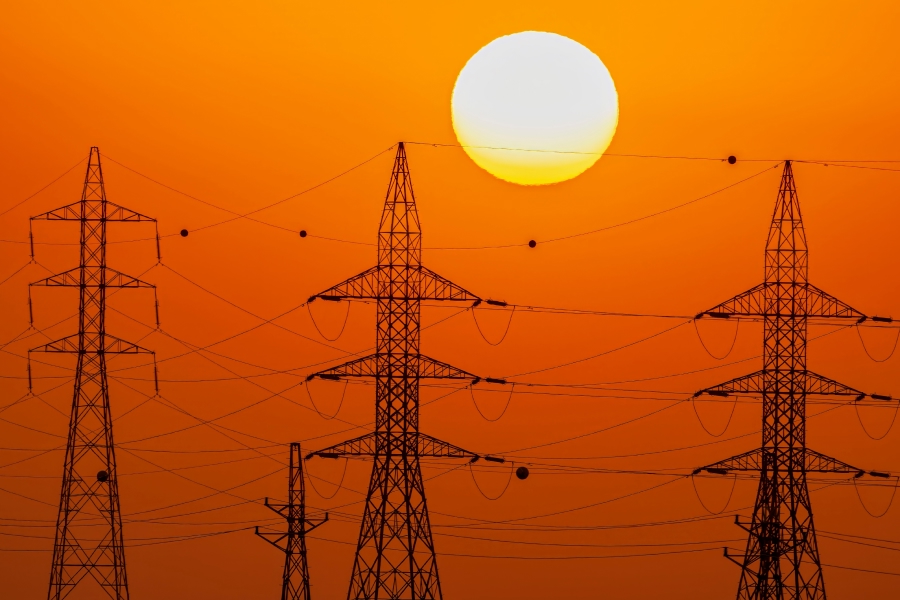
America’s largest power grid operator is sounding an alarm, and on the surface, it looks like an energy story.
Recent reporting by The Wall Street Journal on the PJM Interconnection, which supplies electricity across 13 states from New Jersey to Illinois, paints a stark picture: soaring demand from AI-driven data centers, aging power plants retiring faster than replacements can come online and a grid edging closer to reliability limits during extreme weather.
Consumers are already seeing higher rates. Policymakers are warning about rolling blackouts. Tech companies, according to WSJ, are pushing back on proposals that would force them to curb usage during peak demand.
It’s tempting to frame this as a problem of insufficient power — too many servers, not enough electrons.
But look closer, and a different story emerges.
The United States isn’t running out of energy technology. It isn’t lacking capital, innovation or even shovel-ready projects. What it’s running into is the outer edge of a system designed to approve infrastructure slowly, sequentially and in silos — a system that hasn’t kept pace with the speed of modern demand.
The AI power crunch isn’t just stressing the grid but exposing a deeper failure in how the country plans, permits and coordinates the infrastructure that keeps the lights on.
Demand is moving faster than the system that approves supply
For decades, electricity demand across much of the U.S. was flat. Planning models assumed incremental growth. Permitting timelines — often measured in years — were frustrating but manageable.
That world no longer exists.
Data centers, electrification and industrial reshoring have rewritten demand forecasts in a matter of years, not decades. In regions like PJM, peak-load projections have jumped sharply, driven in large part by hyperscale computing facilities that draw enormous amounts of power around the clock.
At the same time, the infrastructure required to support that growth — high-voltage transmission lines, substations and new generation — moves far more slowly. The US Department of Energy has made clear that thousands of miles of new transmission are needed each year to maintain reliability and integrate new resources. In practice, recent construction has delivered only a fraction of that pace.
This mismatch matters because the power system can’t be expanded retroactively.
Permitting frameworks require utilities and developers to demonstrate need based on forecasts, not hindsight. Yet approving large infrastructure projects for projected demand — especially demand tied to private data center investment — invites scrutiny from regulators, ratepayer advocates and local communities.
The result is a planning paradox: Agencies are asked to move faster than ever while justifying decisions under rules built for slower, more predictable growth.
In that environment, delay isn’t a bug, but the default outcome.
The interconnection bottleneck: Where projects go to wait
If transmission permitting governs how power moves, interconnection governs whether it exists at all.
Interconnection is the process by which new power plants — solar, wind, storage, gas or nuclear — are studied and approved to connect to the grid. It’s meant to be a technical checkpoint. In practice, it has become the single largest choke point in U.S. power development.
Across the country, interconnection queues now contain proposed generation capacity that exceeds the size of the entire existing power fleet. The overwhelming majority of that capacity is clean energy or storage. And yet, historically, fewer than one in five projects that enter these queues ever reach completion.
Nowhere has this breakdown been more visible than at PJM.
Facing an unmanageable backlog, WSJ reports that PJM halted new applications and overhauled its process, shifting from a first-come, first-served system to a first-ready model that forces developers to demonstrate site control and financial commitment before moving forward. The goal: to clear speculation and focus resources on projects that could realistically be built.
The reform is necessary. It’s also revealing.
Even as PJM processes its backlog, a critical fact has emerged: Tens of gigawatts of generation have already cleared PJM’s studies and secured interconnection agreements — and still aren’t online. From the grid operator’s perspective, these projects are approved.
What’s holding them back isn’t grid math. It’s everything that comes after.
Local siting approvals. Environmental reviews. Community opposition. Sequential agency signoffs that don’t align. Supply chain constraints triggered by upstream permitting delays. Interconnection reform can speed up the front of the pipeline, but it can’t fix a delivery system where the remaining gates are disconnected and slow.
That’s the quiet truth beneath today’s grid headlines: Fixing one bottleneck doesn’t help if the rest of the process still breaks the project.
Why permitting still slows projects
It’s easy to assume that once a project clears federal environmental review or secures an interconnection agreement, the hardest work is done.
Yet that’s often when the most unpredictable delays begin.
Federal agencies have made progress compressing environmental review timelines. Statutory deadlines now exist for major reviews, and median completion times have come down.
On paper, the process is moving faster.
But averages hide a more important truth: The projects that matter most — large, complex, region-shaping infrastructure — still move slowly. Not because agencies ignore deadlines, but because the stakes of getting them wrong are high.
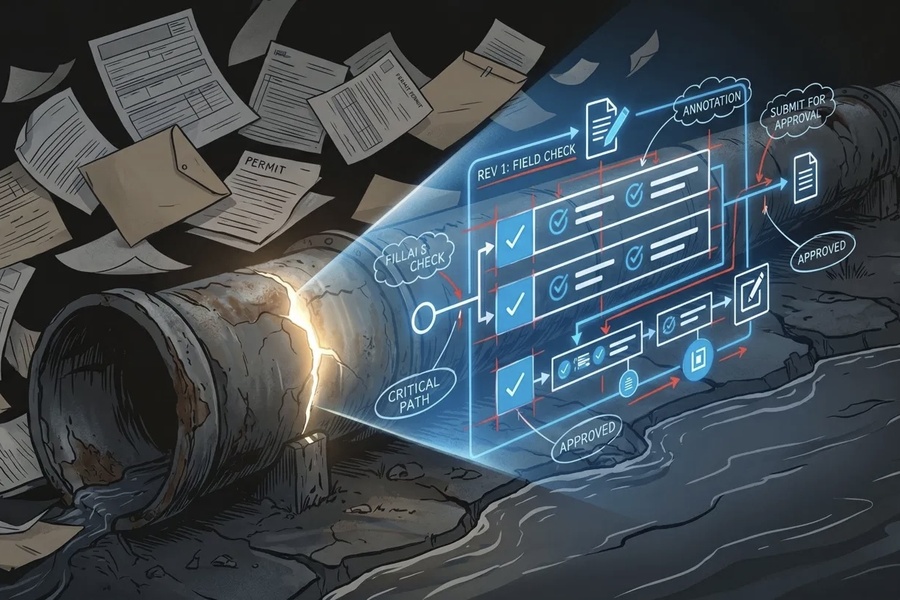
For these projects, permitting isn’t a linear checklist, but a web of overlapping approvals, sequential decisions and legal exposure that stretches far beyond any single review.
A federal environmental approval, for example, doesn’t clear the way for construction. It signals the start of a new phase involving state siting boards, local zoning authorities, land-use negotiations, utility commissions and, often, the courts. Each step introduces new actors, standards and opportunities for delay.
Litigation risk amplifies the problem. Even when agencies ultimately prevail, the cost of losing time — sometimes years — can be fatal to a project’s financing or schedule. The rational response is defensive documentation: longer reviews, thicker reports and more exhaustive analysis designed to withstand scrutiny rather than move quickly.
The system complies with the law but slows itself down in the process.
Beyond the courtroom, coordination failures compound the drag. Reviews are often sequential, not concurrent. One agency waits for another before acting. A late-stage change can trigger re-review across multiple jurisdictions. Timelines drift not because anyone says no, but because no one is empowered to align the work.
This is how projects end up approved but stalled — cleared at the regional level yet immobilized by the cumulative weight of disconnected decisions.
The irony is that these delays are rarely caused by a single fatal flaw. More often, they emerge from late discovery: a routing conflict identified after years of planning, a stakeholder concern raised after documents are finalized, a condition imposed after design decisions have hardened. Problems found late are expensive to fix and politically difficult to resolve.
Today’s permitting bottlenecks aren’t just about speed but timing.
When process fails, infrastructure becomes a political fight
When permitting systems break down, infrastructure stops being a technical or administrative challenge and becomes a political flashpoint.
Projects are no longer evaluated primarily on engineering merit or public need. They become symbols — of federal overreach, environmental neglect, local disenfranchisement or corporate influence. Once that shift happens, timelines stretch not because the work is hard, but because consensus collapses.
Large grid projects are especially vulnerable. Transmission lines cross jurisdictions. Generation reshapes landscapes. Data centers raise questions about who benefits and who pays. Each layer of review introduces a new venue for opposition, often long after initial decisions have been made.
A project clears one authority only to be stalled by another. Local boards revisit issues already studied at the federal level. State agencies impose conditions that ripple back through design. Elected officials reopen settled questions under public pressure.
None of these actions are irrational on their own. Together, they grind progress to a halt.
Once a project enters this phase, even technical fixes struggle to regain momentum. Reviews are re-litigated in public forums. Agencies grow more cautious. Developers hesitate to commit capital. The process slows further, reinforcing the perception that infrastructure itself is broken.
The grid doesn’t fail all at once. It frays.
What helps — and what doesn’t
When grid projects stall, the instinct is to look for a single fix: change the law, shorten reviews, override local opposition or add staff. None of those levers works on its own.
What does help is clearer.
Where projects are numerous, standardized and low risk, automation can deliver real gains. Residential solar permitting is a clear example: When compliance can be validated against uniform rules, digital review can shrink timelines from weeks to hours. Not every project can be automated — but repeatability matters.
For large infrastructure, speed comes from coordination and visibility.
Shared schedules, common document sets and public milestones don’t eliminate conflict, but they reduce drift. When agencies work from the same information and commit to aligned timelines, reviews are more likely to happen concurrently rather than sequentially. Surprises become less frequent and less damaging.
Equally important is what happens before formal review begins.
Projects that integrate environmental, land-use and community constraints early — while routes and designs are still flexible — tend to face fewer fatal challenges later. Early coordination doesn’t prevent opposition, but it surfaces it sooner, when adjustments are still possible.
Speed is rarely unlocked by compressing one step in isolation. Accelerating interconnection doesn’t help if local siting approvals lag by years. Shortening environmental reviews doesn’t matter if litigation risk remains unresolved. Adding staff without improving how information flows simply creates more parallel work, not better decisions.
Technology alone isn’t a cure-all. But better collaboration, clearer visibility and shared documentation can reduce the friction that makes disagreement more expensive than it needs to be — especially in public-sector infrastructure, where accountability and transparency matter as much as speed.
The real constraint on the AI economy
The strain showing up across the power grid isn’t a failure of technology or ambition. It’s a signal that the systems used to approve and deliver infrastructure are being asked to operate at a speed they were never designed to sustain.
AI didn’t create this problem. It revealed it.
Long before data centers rewrote load forecasts, the gap between infrastructure need and delivery was widening. AI compressed the timeline, forcing institutions built for gradual change to confront demand that moves in years instead of decades.
The lesson from PJM and similar regions isn’t that the grid can’t support growth, but that growth exposes every weakness in how projects are coordinated, reviewed and approved. When those processes fracture, even technically viable solutions stall. Capacity exists on paper. Reliability erodes in practice.
Fixing that disconnect doesn’t require abandoning environmental review or public oversight. It requires recognizing that speed and rigor aren’t opposites — and that early coordination, shared information and transparent workflows are now prerequisites for building anything at scale.
The future of the grid will depend less on how much power can be generated than on how effectively institutions can work together to deliver it. In an economy increasingly shaped by AI, that may be the most important infrastructure challenge of all.
Parth Tikiwala is a public sector and academic strategy leader driving digital transformation and innovation at Bluebeam by building partnerships across government, education and the AEC industry.
……
How Bluebeam Fits In
How does Bluebeam support faster permitting and infrastructure reviews?
Bluebeam helps teams manage the complexity that slows permitting: disconnected reviews, version confusion and late-stage surprises. By centralizing documents, markups and decision trails in a shared digital environment, Bluebeam makes it easier for agencies, utilities and project teams to review plans concurrently rather than sequentially.
Why does document coordination matter so much in permitting delays?
Many infrastructure projects stall not because of a single denial, but because information moves unevenly across stakeholders. Bluebeam provides a common source of truth for plans and comments, reducing rework and preventing issues from resurfacing late, when design flexibility and political capital are already limited.
How does Bluebeam help surface conflicts earlier in the process?
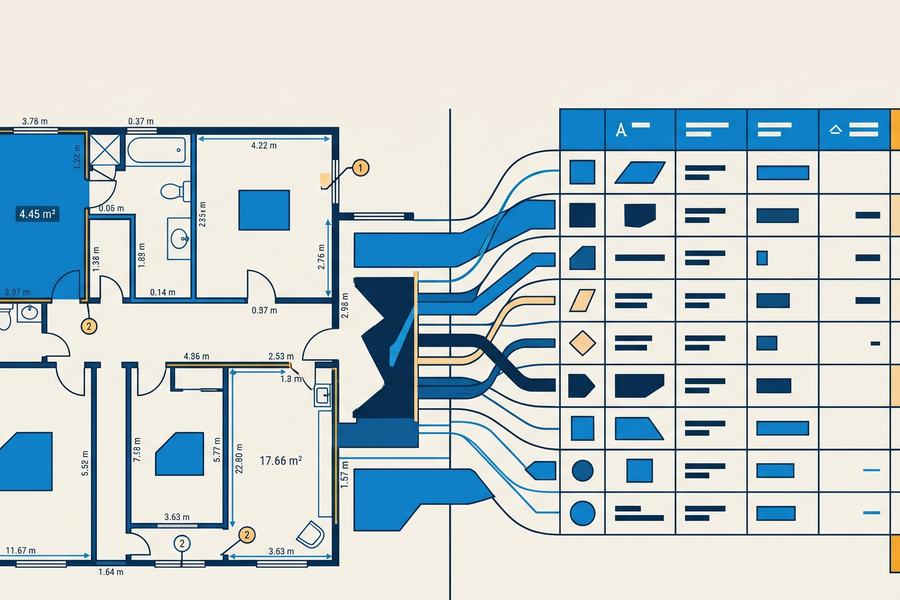
Early discovery is critical in high-stakes infrastructure projects. Bluebeam’s markup, overlay and comparison tools allow teams to identify routing conflicts, environmental constraints or scope changes while designs are still adaptable — before they trigger re-review cycles or litigation risk later in permitting.
Can Bluebeam support multi-agency and multi-jurisdiction reviews?
Yes. Large grid and transmission projects often involve federal, state and local reviewers working on different timelines. Bluebeam enables parallel review by allowing multiple stakeholders to comment on the same set of documents, track responses and maintain a clear record of how issues were resolved across jurisdictions.
Where does Bluebeam add the most value in grid and energy projects?
Bluebeam is most effective where complexity and coordination are the limiting factors — transmission lines, substations, generation facilities and data-center-adjacent infrastructure. In these environments, the ability to align reviewers, document decisions and maintain transparency can be as critical as engineering itself.
How does this connect to the broader AI-driven infrastructure challenge?
As AI accelerates demand, infrastructure timelines are being compressed without simplifying oversight. Bluebeam doesn’t replace permitting systems or policy decisions, but it helps institutions work together more effectively within them by reducing friction, improving visibility and making speed and rigor compatible rather than competing goals.