If you build roads, bridges or transit, the news from Washington in early September sounded like a win. Congress kept federal highway and transit programs running through Dec. 11. No lapse, no frozen contracts, no bid openings pushed into next season while everyone waits on paperwork.
The bill passed the Senate 90-6 in August, cleared the House 370-48 on Sept. 1 and was signed the next day. The statements went out within hours. Most of them used some version of the same word. Averted.
The relief is warranted as far as it goes. When federal highway authority lapses, states can’t commit new federal dollars to projects. Lettings stall, awards slip and work gets shoved into a construction season with no room for it. Anyone who has lived through one is right to want it avoided.
The trouble is that the extension keeps the programs open. It doesn’t cover the money.
One deadline moved. The other didn’t.
The 2021 infrastructure law did two things at once. It set the rules and funding levels for federal highway and transit programs through this September, and it added a big pot of extra money on top of the formula funding states get every year. The extension renews the first. It lets the second run out Sept. 30. That’s roughly $36.8 billion a year in federal transportation funding gone starting Oct. 1, the yearly share of the $184 billion the law set aside up front. Transit and passenger rail take the steepest cuts in percentage terms. The American Public Transportation Association puts them at 20% for transit and 81% for passenger rail. Highway and bridge programs lose about $9.5 billion a year.
The extension buys 10 weeks, not a plan. The House Transportation and Infrastructure Committee approved a five-year, $580 billion highway and transit bill May 22, and the full House hasn’t voted on it. It also leaves out the extra up-front money entirely. The Senate hasn’t released a bill of its own. House Speaker Mike Johnson has said he wants to finish the job this year. With members heading home to campaign, that means the short session after the Nov. 3 midterms, with a Dec. 11 deadline.
So if you’re planning next year’s work, plan around three things: a short runway on the programs, a real cut to the extra money starting Oct. 1 and a fight over the next bill that happens with less money on the table than last time.
What tightening looks like on a project
Funding pressure doesn’t arrive as a headline. Rather, it arrives as a letting that slips a quarter, or a grant award that never gets announced. It arrives as a corridor project split into two phases, so the first one can go now and the second can wait for a bill that may or may not come.
Formula money, the dollars states get automatically every year, is the last to get touched. Competitive grants get squeezed first, because they’re the easiest thing to pause. For a design firm that turns into a decision about which pursuits are worth chasing. For a contractor it’s a bid schedule with holes in it. For a DOT or transit agency it’s a program that has to justify itself in more detail than anyone asked for in 2022.
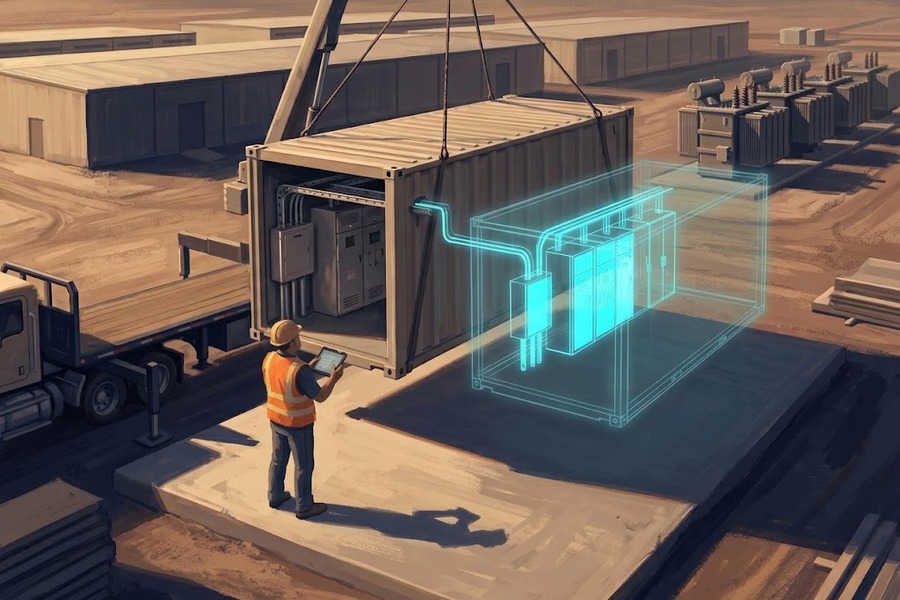
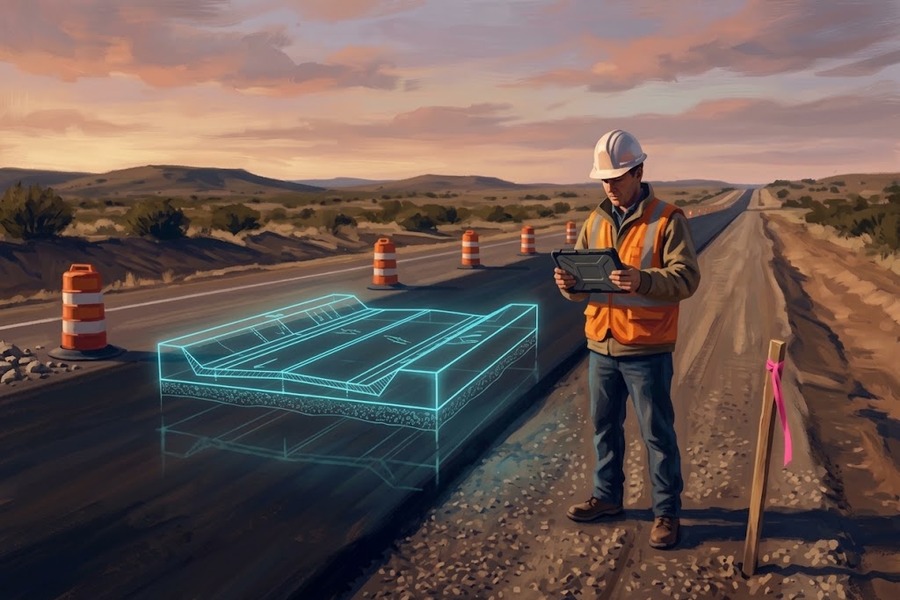
There’s a second-order effect that concerns me more, and it lands directly on digital delivery, the shift from paper plan sets to designing, building and inspecting projects from 3D models and connected field data.
Owners in the middle of that shift are carrying a real cost. New deliverable standards, retraining, model-based workflows that take longer the first several times through. The payoff comes later. Budget pressure makes putting it off look like prudence. Push the pilot to next year, get through the cycle, pick it back up when the money settles.
That trade looks reasonable on a spreadsheet, and it’s the wrong one, for a reason that rarely gets said out loud.
The documentation is the argument
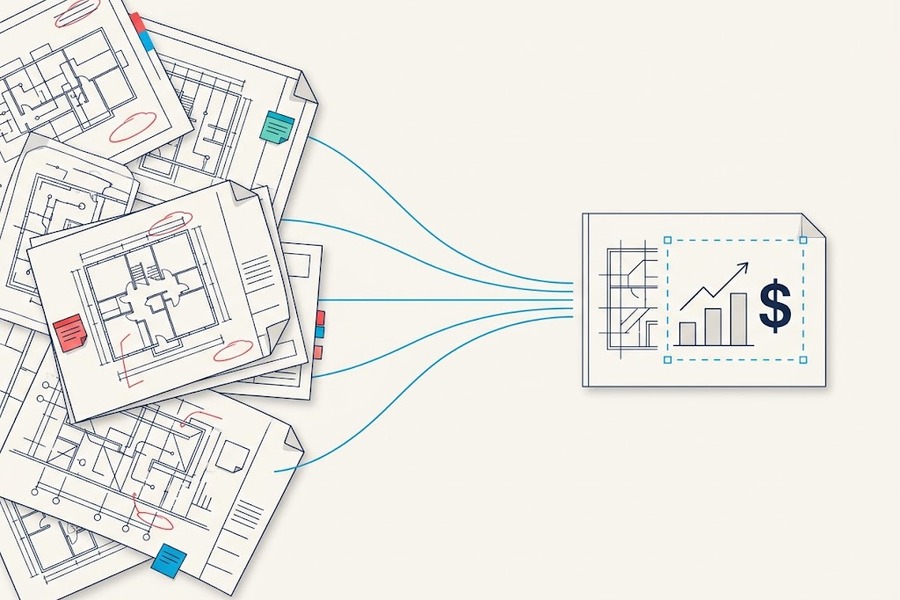
The pattern was consistent enough to plan around. When money gets tight, scrutiny goes up, and the scrutiny is about paperwork. It shows up as a request for detail the record was never organized to produce, landing on staff who have two weeks to reconstruct four years of work. Programs that can answer keep their standing. Programs that hand over a summary when someone asked for the underlying data lose an argument they didn’t know they were in.
None of that appears as a line item. It appears as a revised figure, a missed window, an application that went in thinner than it should have.
The next highway bill will be written by people asking what the infrastructure law bought. Every agency will have an answer. Some of those answers will be documented and some will be assembled from memory, and the difference will be visible.
Where the record breaks
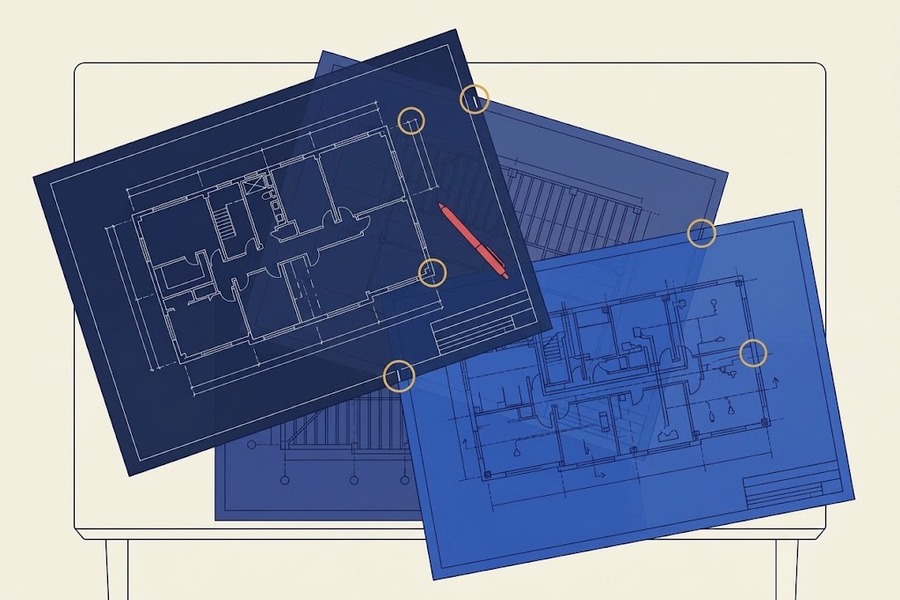
Owners digitize the design side first, which is the rational order. Plan review is contained, it happens indoors, and the people doing it already work in software. The improvement shows up within a couple of quarters.
Then the project mobilizes and the record hits the shoulder of the road.
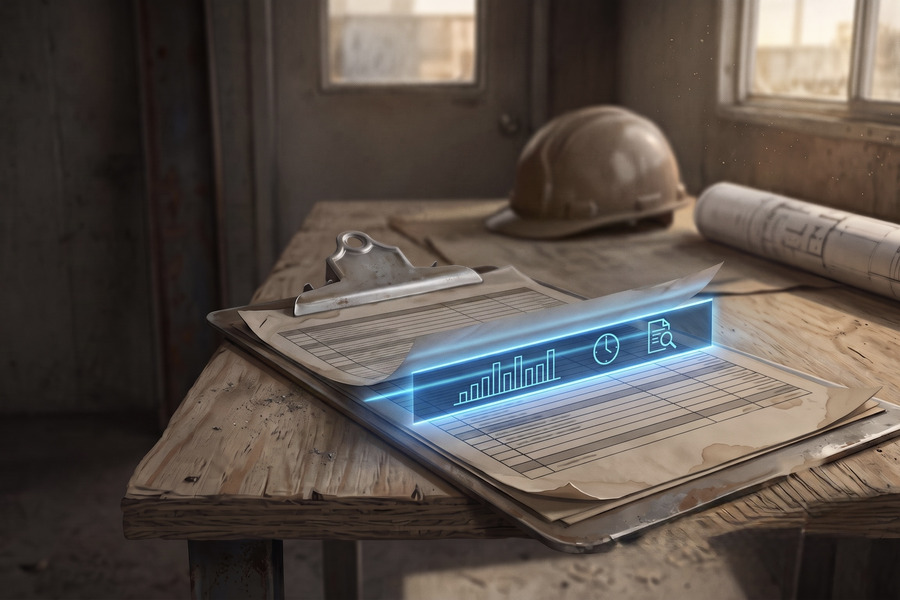
Field capture is the harder half by a wide margin. The inspector or superintendent is outside, often without signal, working a day that doesn’t accommodate careful data entry. What gets written down is written under conditions nobody would choose. That’s also where federal accountability lands, because the concrete pours, the materials tests and the daily reports are the evidence. Everything upstream is intent.
A project with a spotless plan review history and a reconstructed field record hasn’t closed the gap. It has documented one side of it well.
Texas is worth watching because it’s being honest
In September 2025, a 0.311-mile stretch of rural highway in Guadalupe County finished construction. FM 1977 runs from FM 621 to the Caldwell County line, a full-depth reconstruction with widened shoulders. It was the first Texas Department of Transportation project designed, bid and built through digital delivery, and the first where the 3D model, not a plan set, was the contract document contractors bid on. It was let at about $1 million, well under the engineer’s $1.9 million estimate. That estimate priced in risk for a first pilot, and the bids came in lower anyway.
TxDOT has since directed each of its 25 districts to nominate a project of their own that goes to letting by the end of 2027. All 25 have. The second pilot to go out for bid, a bridge replacement on FM 44 in the Paris District, was scheduled to let this month.
FM 1977 is instructive less for what worked than for what TxDOT published about what didn’t. The pilot page notes that new model standards, including pay-item data attached to model elements and cleaned-up 3D surfaces for machine control, introduced a learning curve and added design effort, with the hope of recouping the time on later projects. The design review had its own stumble. Only one reviewer fully engaged on the project’s primary review platform, so the team switched late to a Bluebeam session to keep things moving. Full disclosure, since that’s my company: TxDOT’s lesson wasn’t about which software. It was, instead, that reviewers need earlier training and clearer expectations. The agency’s wrap-up is just as plain about the field. During construction, not every planned digital workflow got used, and a shared online workspace with the contractor fell through over IT security requirements. That’s the half of the record where accountability lands. A TxDOT engineer described the program in the agency’s own newsletter as stair-stepping, and put the first-generation pilots at roughly a 25% change from traditional practice rather than a wholesale one.
That is an unusually candid thing for an agency to put in writing, and it’s worth more to the rest of the country than any success metric in the file. It tells the other 49 states how big the first step actually is, which is the number that decides whether anyone attempts it. It also makes the case against waiting. A 25% change absorbed across several projects is manageable. The same change attempted in a hurry, in 2028, because a funding application needed records nobody kept, is not.
The part that’s yours
Congress will decide what replaces the infrastructure law, on what schedule and whether the extra money comes back. That belongs to the committees, and I have no business prescribing a mechanism from where I sit. The industry is right to press for a multiyear bill and right to say so loudly, because the math behind the Highway Trust Fund, the federal gas tax account that pays for most of this, hasn’t worked since 2008. Pretending otherwise helps nobody.
Still, none of that timeline is yours to set.
What happens on your own projects is. Whether the field record gets captured once or rebuilt later. Whether the documentation behind the infrastructure law’s five years can be produced on request or has to be assembled on deadline. Whether the districts that have never run a digital project volunteer for one or wait to be told.
That goes for everyone on the job, not just the owner. The contractor’s daily reports, the inspector’s notes, the designer’s markups and the photos from the pour are the record. Captured once, cleanly, they’re ready when someone asks.
None of that will make an editorial page. No floor speech is going to mention a crew that captured its inspection record once instead of twice, and no reporter is going to call about it.
Those decisions are sitting in front of you anyway, and they have a deadline of their own.
Parth Tikiwala is head of government affairs at Bluebeam, a construction technology company and member of the Nemetschek Group, and head of global public sector for the Nemetschek Group. He previously served as acting director of technology modernization and data, and acting director of science and infrastructure policy, at the U.S. Office of Management and Budget, Executive Office of the President.