The skilled labor shortage doesn’t just keep contractors up at night. It keeps the whole industry honest. Every tool built for the jobsite depends on one thing: people who know how to use them. When the industry can’t find those people, everyone loses — the GC, the sub, the software company, the owner waiting on a building that isn’t coming.
That’s the context for what Construction Ready is doing in Georgia. And it’s worth paying attention to.
Scott Shelar grew up tagging along behind his grandfather — a small residential developer in Florida who built houses with his hands. But this was the 1980s, and the message to young people was loud and clear: Go to college.
So Shelar did. He wasn’t unusual. A whole generation of potential tradespeople got pushed in the same direction. The construction workforce has been paying the tab ever since.
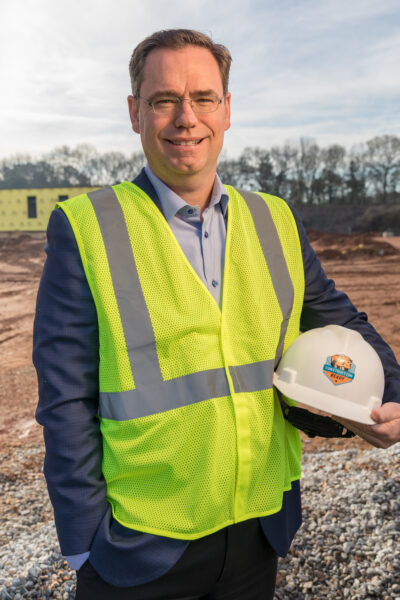
Now Shelar is president and CEO of Construction Ready, a Georgia-based nonprofit working to close that gap since 1998 — when he first joined the organization. In January, Associated Builders and Contractors estimated the industry would need 349,000 new workers in 2026 alone to meet demand and 456,000 new workers in 2027. In Georgia, the annual shortfall runs about 10,000 workers. In 2024, Construction Ready brought more than 2,500 of them in.
“We’re having a 25% impact on the shortage we have in the state,” Shelar said. “It’s very measurable, and it’s very significant.”
Knocking down the door
The shortage isn’t just a contractor’s problem. It’s a people problem — generations of workers who were never shown a clear path into the trades, never told it was a real option, never handed the gear and credentials to walk onto a jobsite and get started. Nobody pulled them aside and said: This is a career. A good one. And here’s how you get in.
“We’ve really done a disservice to generations of young people by not lifting up those opportunities and giving them a real clear pathway and direction to pursue those opportunities,” Shelar said.
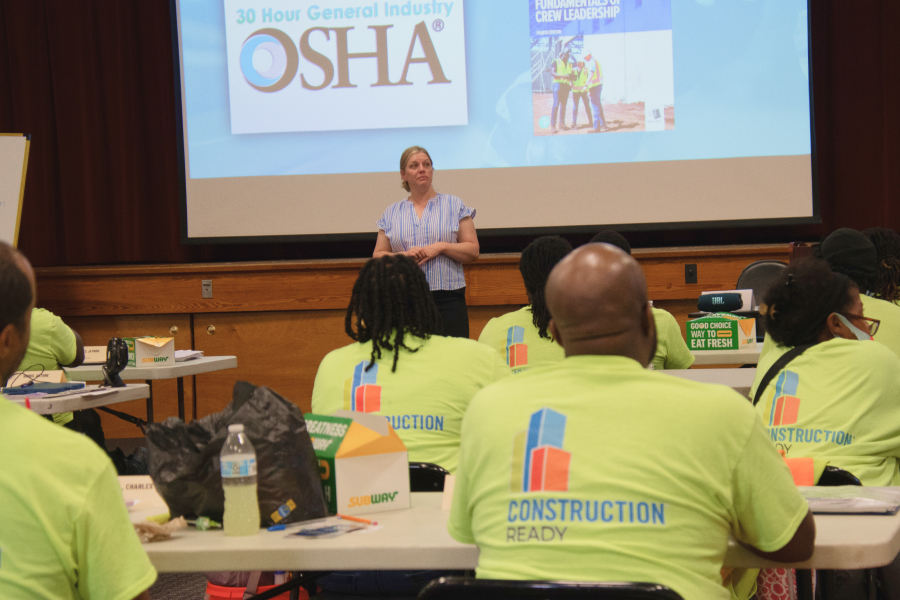
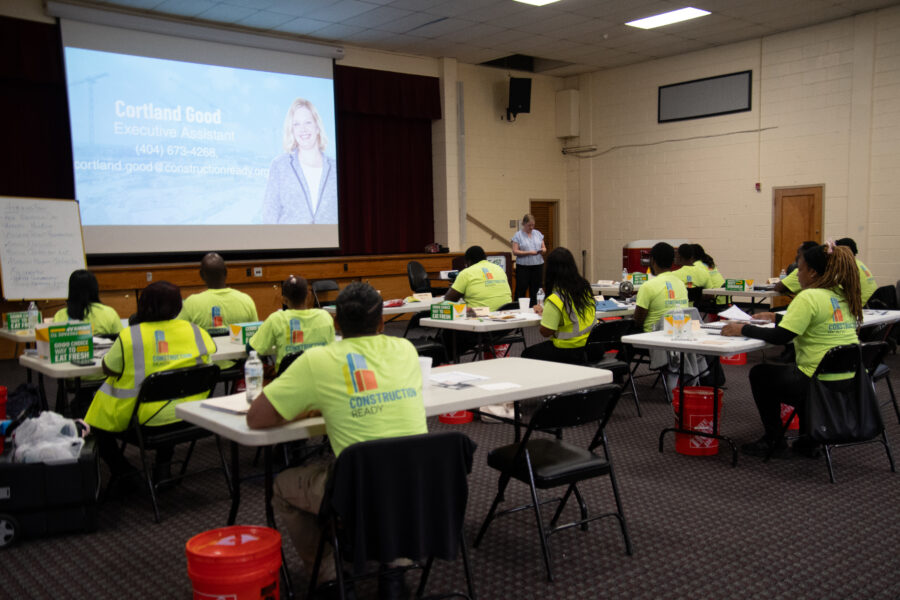
Construction Ready’s adult program attacks that problem directly. No tuition or prerequisites. Four weeks, 160 hours. Participants learn how to use power tools, how to read blueprints — and the stuff that matters just as much on a real jobsite: showing up on time, staying drug-free, understanding what employers need from someone on day one. Graduates walk out with OSHA 10-Hour certification, first-aid credentials and the tools and safety gear to start work immediately. Then Construction Ready runs a hiring fair with a 96% placement rate.
“The whole idea of the training is to knock down as many barriers as we can for a person wanting to get into our industry,” Shelar said.
That’s not a mission statement. That’s a design principle. The program is engineered around every friction point that typically stops someone from getting a foot in the door — cost, credentials, connections, gear. Remove enough of them, and people walk through.
Building the pipeline from the ground up
The adult program is the fast lane. The longer game is happening in schools.
Construction Ready supports more than 200 high school construction programs across Georgia, reaching more than 20,000 students. Carpentry, electrical, masonry, plumbing, architectural drafting, heavy equipment operation. Shelar calls it what it is: a talent pipeline. Not a feel-good initiative. Not a PR play.
A pipeline.
Still, pipelines need pressure to work. Shelar figured out early that one of the biggest leaks in the system was teacher retention. A skilled trades instructor can make considerably more money going back to industry. The good ones know it — and eventually, a lot of them go. So Construction Ready built a counteroffer: bonus checks of up to $10,000 for teachers, based on workforce impact — how many seniors they placed in the industry, how connected they are with local construction companies. Last year, the organization paid out more than $300,000 in bonuses across Georgia.
“To keep these good teachers in the classroom and not go back to industry, we figured out one of the key things is just more cash,” Shelar said.
No sugarcoating. That’s what works.
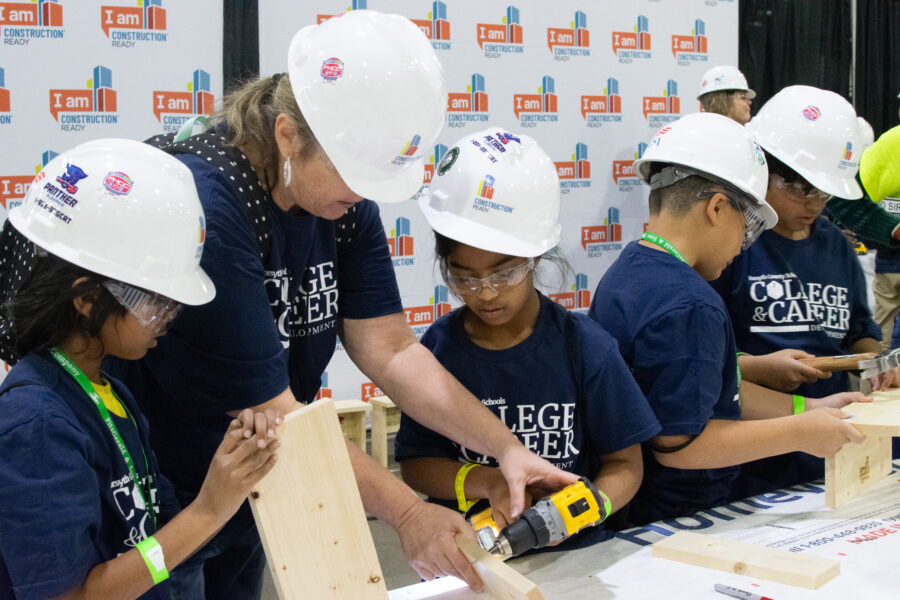
The pipeline now starts even earlier — middle school programs, elementary school visits, dedicated full-time construction teachers in some Georgia schools. The logic is dead simple: if you want someone choosing the trades at 18, you need them curious at 10. You need them to have touched a saw, read a plan, felt what it’s like to build something real — before anyone tells them it’s not for them.
“We have to start early,” Shelar said. “We have to start planting those seeds at a young age.”
The work ahead
Construction Ready runs on a mix of philanthropic funding, support from construction companies, and local, state and federal dollars. It has expanded into Florida. The challenges ahead are real — an aging skilled workforce, the constant pressure to scale, the grinding, daily work of convincing the next generation that a career built with your hands is worth choosing.
Shelar has been at this long enough to know what it means when it works — when someone finds a trade that clicks, gets placed, builds a life.
“Finding a career that you love is so important in life; we spend so much time working,” he said. “I love that we’re able to help people find a career that they love, a career where they can make a great living.”
That’s the whole point. Not just for Construction Ready, but for everyone who depends on a skilled, ready workforce to get the work done — the work that ultimately gets done, by actual people, on actual jobsites.