
On a late night sometime around 2018 or 2019, Jean-Pierre Trou sat at his dining room table in Austin with 250 pages of construction drawings spread in front of him. A 90,000-square-foot Class A office building, three stories, represented across dozens of sheets: architectural plans, structural details, MEP routes.
Red pen in hand, he was checking for the kinds of errors that cost hundreds of thousands of dollars if they’re not caught before construction starts: an uncoordinated curtain wall detail, missing vertical penetrations over structural elements, a conflicting mechanical route; the kind of mistakes that compound through every floor.
“This is me on the dining room table, redlining drawings,” Trou said in a 2024 podcast, describing his nightly quality-control routine. The review took him a full week. This, he was careful to point out, wasn’t just his problem.
“It’s the whole industry.”
In 2026, this is still what quality control largely looks like in architecture. It’s still manual and tedious. It’s still expensive. And it’s still happening at dining room tables across the country.
Most architects would stop at complaining. Trou built software to fix it. Yet the twist in his story, the thing that makes it different from the usual founder-exit narrative, is that for a time, he never actually left that table.
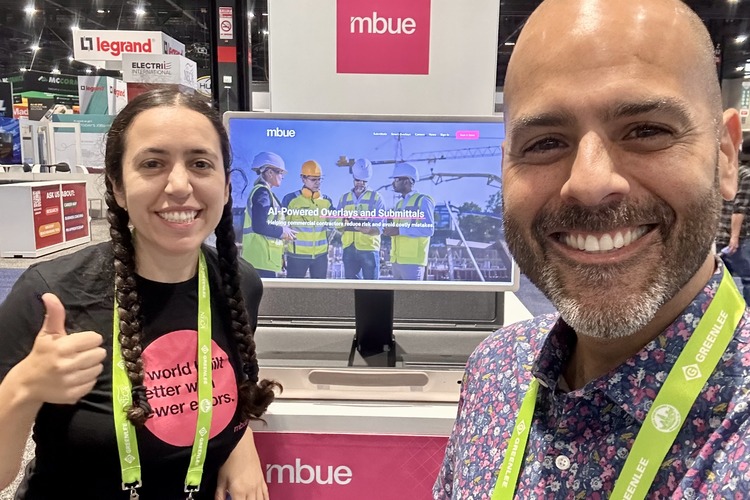
For 20 years, he ran Runa Workshop, an award-winning architecture firm. For the past four, he also built mbue, an AI startup that uses computer vision to review drawings and generate trade submittals. He did both simultaneously. Not architect-turned-founder. Just architect who happened to build the AI.
In May of this year, mbue joined Bluebeam. The dining room table problem — missed changes, wasted time, billions in preventable construction errors — is about to scale to millions of users. To understand why that matters, though, you have to understand why Trou kept practicing while he built the software. Because the credibility is the point.
Still Practicing
Runa Workshop, which Trou founded in 2009 with Aaron Vollmer, isn’t a boutique firm that sketches concepts and hands them off. Instead, it builds real, award-winning projects, from some of Austin’s most recognizable office buildings, including WeWork at 801 Barton Springs, Waterloo Central downtown, and the recently completed Victory Plaza in Central Austin, to Caffé Medici on South Lamar, the Austin Visitor Center, ViaSat’s Austin office, and YMCAs across the city.
Sixteen years of built work, and the firm is still operating.
The name comes from Quechua: “runa:” means “people,” and “workshop” signals exchange. Trou is Peruvian American, born in Lima, trained at Universidad Peruana de Ciencias Aplicadas before earning a master’s in architecture from the University of Texas at Austin. He’s been in Texas for two decades.
Trou is also a founding partner at Vaast, a real estate development company, which means he doesn’t just design buildings; he owns them, finances them, lives with the consequences when construction errors show up on the balance sheet. He’s licensed: NCARB, TBAE, AIA, ASID. He taught at UT Austin’s School of Architecture from 2019 to 2021. All of this while founding and scaling mbue.
Trou’s wife, who’s a director of marketing at an AI company and a former public relations lead at Edelman and Ketchum, says he overcommits. In the 2024 podcast, Trou joked about the problem: “I need an AI to tell me, ‘Jean-Pierre, you’re overcommitted.'”

Yet the overcommitment was structural, not accidental. For years, Trou worked both jobs in parallel. “I did work on both Runa and mbue in the very beginning,” he said in a recent conversation, “but I quickly realized that leading mbue was more than a full-time job and needed my complete attention.” He executed a transition plan over more than six months. By the time mbue scaled, he was fully focused on it as founder and CEO.
But the practitioner instinct, the architect’s eye, never left. “I am an architect, and I always will be,” Trou said. “I am just not working on projects in the traditional sense anymore.”
The $100 Billion Problem
The U.S. construction industry wastes more than $100 billion annually on errors, changes and omissions, according to industry estimates that Trou has cited in press releases and investor pitches. It’s not an abstract figure for him, as he’s watched it happen on his own projects.
“As a founding principal of an architecture firm in Austin, I found myself spending countless late nights reviewing thousands of drawings,” Trou said when mbue announced its pre-seed funding. “It’s astonishing that in 2024, we’re still relying on PDF tools to manually redline drawings.”
Take that 90,000-square-foot office building: three stories, 250 pages. A full week of work. Checking architectural plans against structural and MEP coordination, verifying code compliance, catching graphic errors and text discrepancies. One character change in a slope designation can break gravity lines throughout a building; one wall-thickness error compounds through every floor. Miss it at the table and it costs six figures in the field.
Architects, by industry estimates, spend 30% to 40% of their time on quality control, and they’re not particularly good at it. Human eyes miss things, and those mistakes cascade into 5% to 10% of total construction costs — the very waste he set out to eliminate.
So why couldn’t software solve this decades ago? Because it’s fundamentally a visual and perceptual challenge. A square on a drawing could represent a wall. It could also represent a table. Context tells you which. “Easy for humans to solve,” Trou explained in the podcast, “is very complex for a computer to do it.”
BIM, building information modeling, promised to eliminate coordination errors. It didn’t. The legal and practical reality of construction hasn’t changed: drawings, PDFs specifically, remain the contract documents. The dining room table is still where quality control happens.
The founding moment for mbue wasn’t a sudden insight, but a thousand accumulated frustrations, each one a late night with a red pen, each one an opportunity to ask: What if AI could see drawings the way an architect does?
Building mbue
Trou founded mbue in May 2022 with Ron Green — chief innovation officer and co-founder of KUNGFU.AI — Stephen Straus, Aaron Vollmer and Dave DeCaprio, who joined as CTO in late 2023. The company graduated from Techstars Austin that spring and was spotlighted at the L’ATTITUDE Match-Up, a platform for Latino founders. In September 2024, mbue raised $1.8 million in pre-seed funding led by Techstars. The company joined NVIDIA Inception and Google for Startups Accelerator.
The company started with Smart Overlays, AI-powered drawing comparison and change detection. Character-level text parsing, visual change detection, context-aware object recognition. The technology could identify changes across complex drawing revisions with precision that manual review couldn’t match. Hoar Construction, an early customer, reported saving $100,000 on a single project after mbue caught changes that human eyes had missed.
The move from Smart Overlays to Submittals wasn’t a single insight so much as a natural progression. “Smart Overlays helped us understand changes in drawings with a high degree of precision,” Trou said. “As our models became more accurate at segmenting drawings, parsing text and analyzing specifications, it became clear that we could apply that same foundation to one of the most painful and document-heavy workflows in construction: submittals.”
The logic, as Trou framed it, was simple. If mbue could accurately understand what was in the drawings and interpret what was required in the specifications, the company could connect the two and generate fully compliant product data submittal packages. Choosing Division 26 was deliberate. “Electrical is one of the most complex areas to test this capability,” Trou said. “The information often lives in many different places and formats, including schedules, floor plans, tables, diagrams and specification sections.”
Take a lighting submittal. It requires gathering fixture information from architectural and electrical schedules, then connecting that back to the specifications. A conduit submittal demands identifying conduit schedules, finding locations in electrical plans or diagrams, understanding the environment and materials, and then checking the applicable specification requirements. Each step has its own complexity. If mbue could handle Division 26 consistently and accurately, the thinking went, the same technology could eventually apply to the remaining divisions.
As a result, in September 2025, mbue launched Submittals. Instead of just flagging changes, the platform could now generate the submittal packages required to address them. It uses a proprietary AI model and computer vision to analyze drawings, specifications and electrical schedules, then automatically extracts product requirements and generates submittal packages.
The pilot customer was Weifield Group, a major electrical contractor. Early results: 70% reduction in manual effort, 90% fewer rejections, 50% faster submission cycles. “mbue Submittals removes a long-standing bottleneck for subcontractors,” Trou said when the product launched. “By compressing weeks of paperwork into minutes and improving the accuracy of what gets submitted, we’re giving contractors a faster, more reliable path to approval so they can focus on building, not busywork.”
Trou’s guiding philosophy has remained consistent: augmentation, not replacement. “I would not replace myself,” he says frequently. His reference point in the 2024 podcast interview was characters from the Marvel film Iron Man, Tony Stark and Jarvis: architect as director, AI as assistant. “Show me all deviations between architecture and structural.” “Are there any mechanical conflicts with this proposed solution?” “Give me two rerouting options.” Data-driven design decisions at the architect’s fingertips, not black-box automation.
“We are building a technology that will be able to read and understand technical drawings to a level far superior than a human being,” he said. “It will not only be able to detect changes and potential big, big impactful mistakes, but also understands how to make them right, how to correct them, to provide you real-time design solutions.”
The Bluebeam Chapter
In May 2026, mbue joined Bluebeam. For Trou, the appeal was specific. “We were excited to partner with a company that has spent decades working deeply with PDFs and understands the complexity of construction documents better than almost anyone,” he said. “Bluebeam is already used by so many people in our industry, so bringing mbue’s technology into that ecosystem creates an opportunity for much greater impact.”
The firm’s customers are being transitioned to Bluebeam over 60 to 90 days. The technology mbue built will fold into what Bluebeam is building. The scale shift is dramatic: from a handful of customers to a platform used by millions.
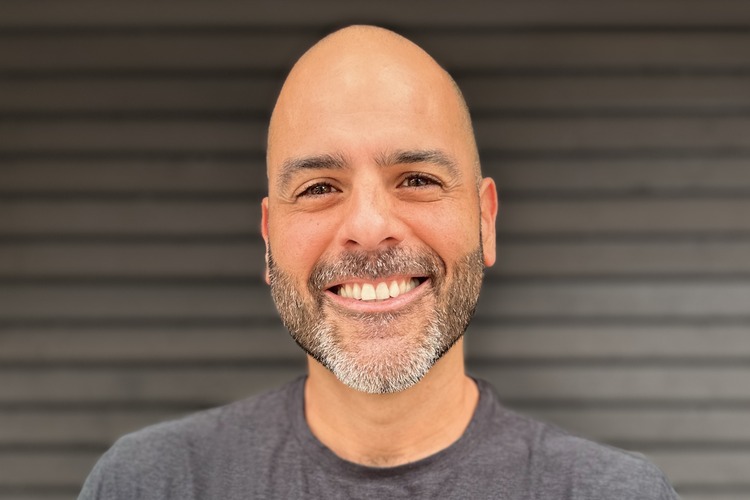
As for Trou himself, the transition is complete. “Today, I am 100% focused on mbue’s work within Bluebeam,” he said. Runa Workshop, the firm he founded in 2009, continues operating under Aaron’s leadership. After more than 20 years of practice, he is no longer actively designing buildings.
Yet the throughline of his story — the architect who never left the table — hasn’t broken. It has shifted. “I don’t think I ever left the table,” Trou said. “In many ways, I am closer to the table now because I am closer to our customers and their challenges, not only understanding the problems but helping solve them at scale.”
What Comes Next
“Imagine value engineering of the future won’t exist,” Trou said in the 2024 podcast, “because you already made all the smart decisions until the point of construction.” That was the vision then: not just detecting errors but understanding how to correct them, surfacing real-time design solutions at the architect’s command.
Two years later, the vision has expanded. “My vision of a world built better, effortlessly and with fewer errors, feels more real than ever,” Trou said. “With Bluebeam, I believe we have the opportunity to dramatically reduce errors in construction over the next few years.” Beyond traditional value engineering, he sees workflows like RFIs, change orders and submittals becoming increasingly automated.
What that frees up matters more than what it eliminates. Less time on tedious, manual coordination. More time on the built side of the work. More time for craft, mentorship, apprenticeships and training the next generation of builders.
The constant in Trou’s messaging, however, has been what doesn’t change. Architects still design. Engineers still engineer. Project managers still manage. AI doesn’t replace judgment; instead, it eliminates tedium. “I would not replace myself” remains the north star.
Trou misses design. He admits as much: “But the opportunity to eliminate errors in construction keeps me excited and energized.” The architect’s identity, he insists, doesn’t depend on the projects. “I am building software that can bring value to every project. The potential impact of that contribution is greater now, and that is both humbling and extremely rewarding.”
If the technology works as intended, the manual review that once took a week might take an hour. The $100 billion in annual waste might drop to $50 billion, then $25 billion. Not so much because AI replaced architects but because an architect who never stopped practicing built the AI that could finally understand what architects see.
The table is still there. He’s just sitting at a different one now.